
 Best Montessori Toys for Fine Motor Skills (2026)
Best Montessori Toys for Fine Motor Skills (2026 Guide)
2026-02-12Whether you’re exploring Best Montessori Toys for Toddlers (Ages 1–3) by skill, building a list with Must-Have Baby Gear 2026, or browsing our baby and kids hub for gift ideas—shopping for Montessori-style toys that genuinely build fine motor skills can feel overwhelming when 2026 options are endless and toddlers outgrow stages fast. This guide is for parents, grandparents, and caregivers who want toddler-approved picks that strengthen pincer grasp, hand-eye coordination, and practical-life independence without clutter. You’ll get 20 curated choices across a few simple lanes—home, learning, and play—plus quick tips to match each toy to your child’s current abilities. Start soon to catch availability and keep progress steady.
Add-on magic: Save gift ideas to your WishDeck wishlist in a tap so you don’t lose ideas and can compare later. Share your wishlist with friends and family in one tap to get the gifts you love and really need.
Table of Contents
1. Posting, Sorting & Early Problem-Solving
2. Threading, Lacing & Pincer-Grip Practice
3. Busy Boards, Latches & Dressing Skills
4. Stacking, Balancing & Hand-Eye Coordination
5. Music, Tactile Play & Calm Focus
6. Ready to Share Your Wishlist
Posting, Sorting & Early Problem-Solving
Posting and sorting toys are Montessori classics for a reason: they’re simple, repeatable, and quietly challenging. These picks help toddlers refine grasp, wrist rotation, and "try again" persistence—without needing batteries or screens.
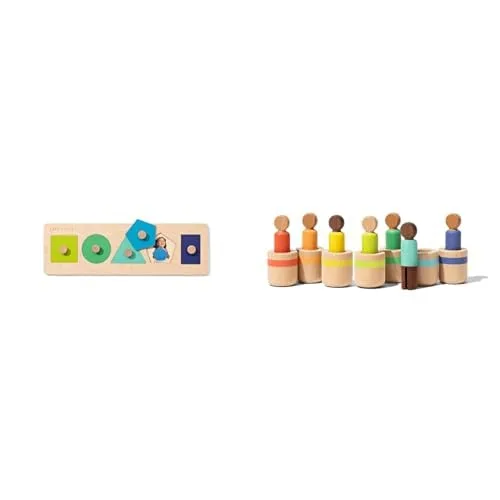
1. Lovevery Post & Play Peg People
1. Lovevery Post & Play Peg People
A posting toy with chunky peg people that toddlers can grasp, align, and drop into slots for satisfying cause-and-effect. In 2026, it's a strong pick for families prioritizing open-ended, screen-free play that still feels "new" every day. Great for toddlers working on pincer grasp, bilateral coordination, and simple matching. The pieces also invite pretend play once posting is mastered.
- Chunky pieces are easy for small hands to grip and control
- Builds posting accuracy, hand-eye coordination, and patience
- Transitions into simple pretend play
- Best play happens with a clear, uncluttered surface
- Some toddlers may lose interest once posting is mastered
- Not ideal for travel due to multiple pieces
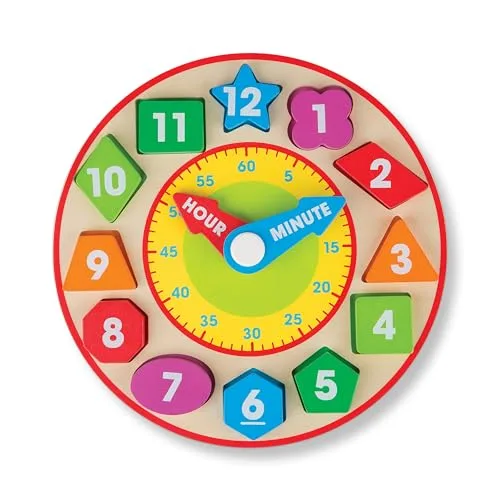
2. Melissa & Doug Shape Sorting Clock
2. Melissa & Doug Shape Sorting Clock
A wooden clock that doubles as a shape sorter, encouraging toddlers to grasp, rotate, and place pieces precisely. It's a 2026-friendly "one toy, many skills" option: fine motor practice now, early time concepts later. Ideal for kids who like order, matching, and repeating a satisfying routine. The chunky pieces support beginner problem-solving without feeling frustrating.
- Combines shape sorting with early clock familiarity
- Chunky pieces support grasp and controlled placement
- Good for independent, repeatable play
- Pieces can wander without a storage plan
- Some toddlers focus on sorting and ignore the clock aspect
- Wooden edges can show wear with heavy use
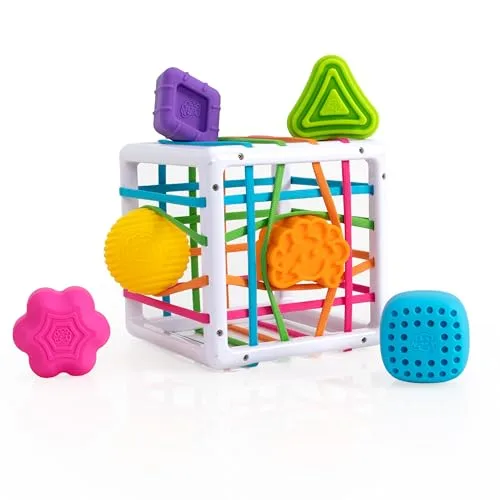
3. Fat Brain Toys InnyBin
3. Fat Brain Toys InnyBin
A soft, modern shape-sorting bin where toddlers push textured shapes through stretchy bands—then retrieve them again. It's a great 2026 option for parents who want Montessori-adjacent problem-solving with a sensory twist. Best for toddlers who love exploring with their hands and figuring out "how it fits." The resistance of the bands adds extra finger strength practice.
- Sensory textures keep toddlers engaged longer
- Stretchy bands add hand-strength challenge
- Easy to reset and replay
- Not a traditional "posting" aesthetic if you prefer all-wood toys
- Bands can collect dust and need occasional wiping
- Some kids may prefer rigid sorters with clear holes
4. Learning Resources Spike the Fine Motor Hedgehog
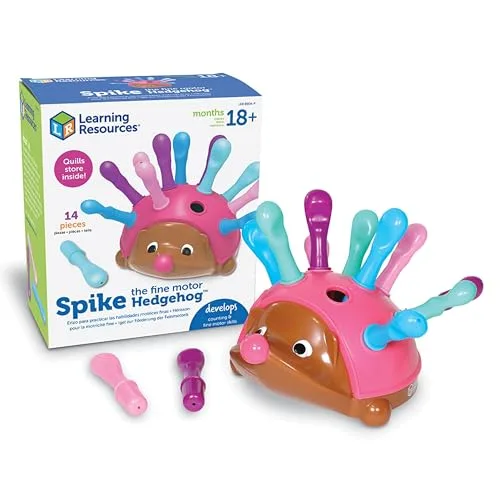
4. Learning Resources Spike the Fine Motor Hedgehog
A friendly hedgehog toy where toddlers place and remove colorful "spikes," practicing pincer grasp and hand strength. In 2026, it's a go-to classroom-style tool that also works at home for quick, low-mess skill bursts. Great for toddlers who like sorting by color and repeating simple routines. The pieces are sized for little hands and easy cleanup.
- Excellent pincer-grip practice with satisfying push-in motion
- Color sorting adds an extra learning layer
- Easy to tidy up and store
- Small pieces require supervision with younger toddlers
- Play can feel repetitive for kids who want open-ended stories
- Spikes can get misplaced if stored loosely
5. Playkidz Wooden Magnetic Fishing Game Set
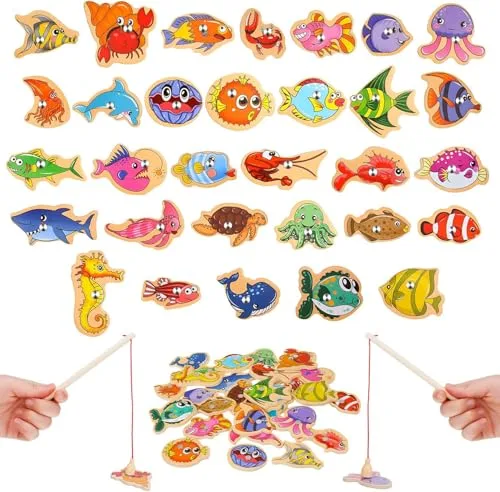
5. Playkidz Wooden Magnetic Fishing Game Set
A magnetic fishing game that encourages careful wrist control, steady hands, and hand-eye coordination. It's a smart 2026 pick for budget-friendly gifting that still feels purposeful and Montessori-leaning. Best for toddlers who love turn-taking with a grown-up or sibling, but it can also work as solo practice. The "catch" moment gives instant feedback without being too hard.
- Builds hand-eye coordination and controlled movements
- Easy to learn, fun for short attention spans
- Great value for gifting
- Magnets can be weaker than expected depending on play style
- Pieces may be small for very young toddlers
- Not as open-ended as building or pretend-play toys
Threading, Lacing & Pincer-Grip Practice
Threading and lacing are quiet powerhouses for fine motor development—perfect for building the pincer grasp needed for crayons, zippers, and buttons. These toys also encourage focus and sequencing, making them great for calm play in 2026 routines.
6. Melissa & Doug Primary Lacing Beads
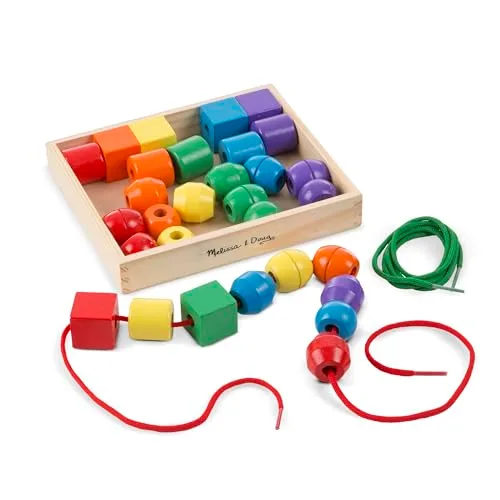
6. Melissa & Doug Primary Lacing Beads
A set of bright wooden beads and laces designed for threading, patterning, and hand strength. In 2026, it's a reliable "grab-and-go" fine motor activity that works for independent play or alongside a caregiver. Great for toddlers practicing two-handed coordination: one hand holds the bead while the other guides the lace. The classic shapes make it easy to create simple patterns as skills grow.
- Strong bilateral coordination practice (hold + thread)
- Doubles as patterning and color sorting
- Portable for play at the table or on the go
- Laces can tangle if not stored neatly
- Beads can scatter easily on hard floors
- Requires supervision if your child mouths small items
7. HABA Threading Game: My First Pearls
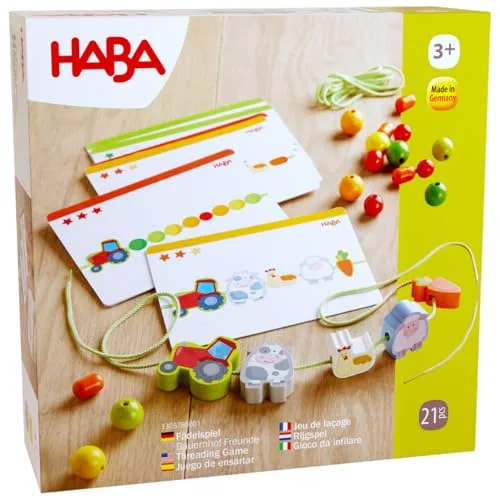
7. HABA Threading Game: My First Pearls
A toddler-friendly threading set with playful pieces that encourage sequencing, planning, and careful hand movements. In 2026, it's a great choice for families who want a slightly elevated, giftable threading toy beyond basic beads. Ideal for toddlers who enjoy storytelling while they work—threading can become "making a necklace" or "building a caterpillar." The pieces are designed to be manageable for younger hands learning control.
- Engaging theme makes threading feel like play, not practice
- Supports sequencing and concentration
- Nice gift presentation for birthdays and holidays
- Threading still requires patience—may need adult support at first
- Multiple parts mean more cleanup
- Not as compact as a simple bead-and-lace set
Busy Boards, Latches & Dressing Skills
Busy boards are practical-life gold: they give toddlers safe ways to practice the same motions they'll use on doors, bags, and clothing. In 2026, these are especially helpful for independent play blocks while you cook, travel, or handle transitions.
8. Melissa & Doug Latches Wooden Activity Board
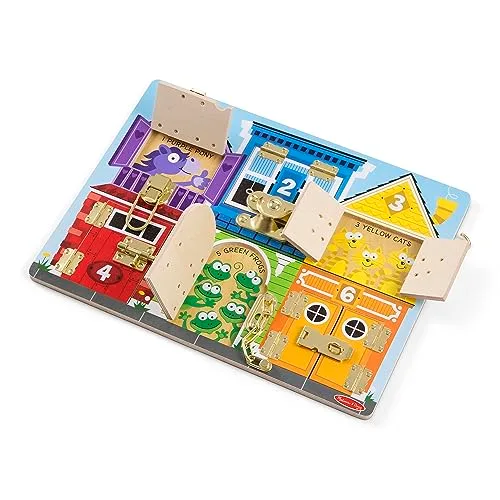
8. Melissa & Doug Latches Wooden Activity Board
A wooden activity board with doors and different latches that toddlers can open and close repeatedly. It's a 2026 favorite for building finger strength, wrist rotation, and "real life" coordination in a way that feels grown-up. Great for toddlers who love fiddly mechanisms and want to copy what they see adults doing. The surprise of what's behind each door keeps motivation high.
- Multiple latch types build varied hand movements
- Encourages independent, focused play
- Satisfying open/close feedback loop
- Can be noisy on hard surfaces without a mat
- Some latches may be tricky for younger toddlers at first
- Wooden doors can pinch if slammed
9. HABA Busy Board: Dress-Me Doll
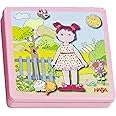
9. HABA Busy Board: Dress-Me Doll
A dress-up busy board that lets toddlers practice clothing fasteners and dressing sequences in a low-pressure way. In 2026, it's a smart pick for families working on independence—zipping, buttoning, and matching outfits without the stress of getting out the door. Great for toddlers who love pretend play but need fine-motor repetition. The board format makes it easy to use at a table or during quiet time.
- Targets real dressing skills (fasteners and sequencing)
- Pretend-play element keeps practice fun
- Compact compared with full dress-up sets
- Some fasteners may require adult help initially
- Less appealing to kids who prefer building or movement play
- Parts can wear with heavy daily use
10. Learning Resources Helping Hands Fine Motor Tool Set
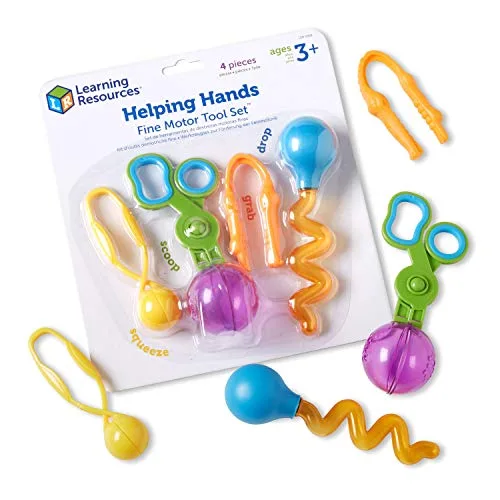
10. Learning Resources Helping Hands Fine Motor Tool Set
A set of kid-friendly tools (like tongs and tweezers) designed to strengthen grip and improve hand control through playful "transfer" activities. In 2026, it's perfect for Montessori-style tray work—moving pom-poms, sorting small objects, or practicing precision. Great for toddlers and preschoolers who like feeling "scientific" while they work. It also pairs well with sensory bins without adding a lot of mess.
- Builds grip strength and precision with multiple tool types
- Easy to create Montessori-style transfer activities at home
- Useful beyond toddler years for preschool fine-motor tasks
- Works best with adult setup (objects to pick up, bowls, trays)
- Some tools may be challenging for younger toddlers
- Small items used with it require careful supervision
11. Robud Wall Busy Board (Elephant)
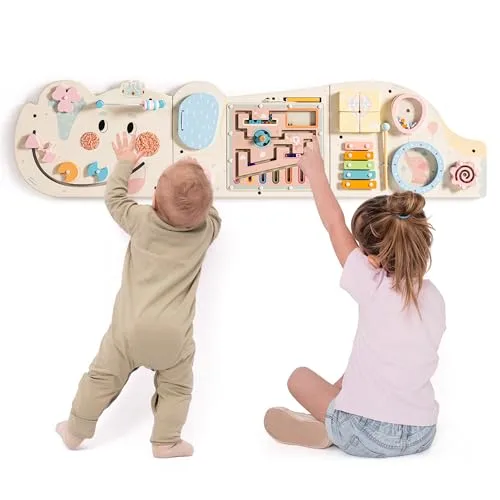
11. Robud Wall Busy Board (Elephant)
A wall-mounted busy board with multiple hands-on elements for twisting, sliding, and manipulating—designed to keep little hands working. In 2026, it's a great solution for playrooms and shared spaces because it saves floor space while offering lots of fine-motor variety. Ideal for toddlers who crave "doorknob and switch" style exploration. Wall mounting can also help reduce toy clutter and keep pieces together.
- Wall-mounted design helps keep pieces from getting lost
- Multiple activities in one station for longer engagement
- Great for shared spaces or playroom zones
- Requires installation and a suitable wall spot
- Not portable for travel or moving between rooms
- Some components may need occasional tightening
Stacking, Balancing & Hand-Eye Coordination
Stacking and balancing toys build more than towers—they train controlled release, gentle pressure, and visual planning. These 2026 picks are especially good for toddlers who like to build, topple, and try again (and again).
12. Lovevery The Block Set
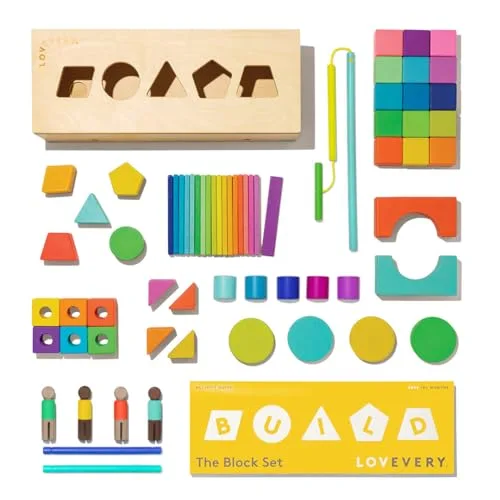
12. Lovevery The Block Set
A premium block set designed for open-ended building, early geometry, and careful hand placement. In 2026, it's a standout "grow with them" gift: toddlers start with stacking and knocking down, then move into bridges, patterns, and more complex structures. Great for kids who love constructing and experimenting with balance. The variety supports fine motor control through different grips and orientations.
- Open-ended play that scales from toddler to preschool
- Encourages controlled stacking, alignment, and planning
- Variety of shapes keeps building challenges fresh
- Higher price compared with basic block sets
- Needs a storage system to avoid scattered pieces
- Large sets can feel overwhelming without simple prompts
13. PlanToys Balancing Cactus
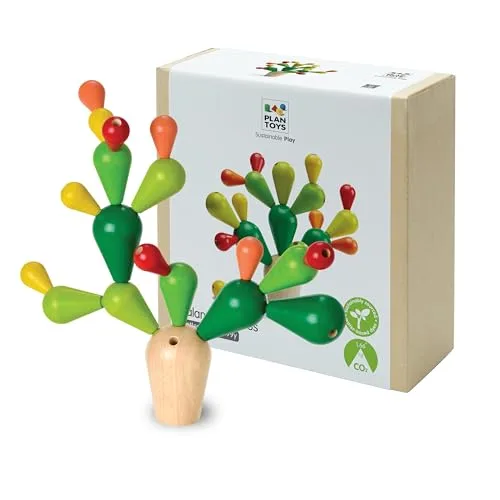
13. PlanToys Balancing Cactus
A balancing game where toddlers carefully stack cactus pieces without tipping the base—perfect for slow, deliberate hand movements. In 2026, it's a fun way to practice fine motor control that feels like a game rather than "skill work." Great for kids who enjoy puzzles, challenges, and turn-taking with adults. It encourages gentle pressure and precise placement.
- Teaches careful placement and controlled release
- Fun as solo play or a simple family game
- Visually engaging and giftable
- Can be frustrating for toddlers who dislike tipping and restarting
- Best on a stable surface to avoid accidental wobble
- Pieces can be misplaced if not stored together
14. PlanToys Nuts & Bolts
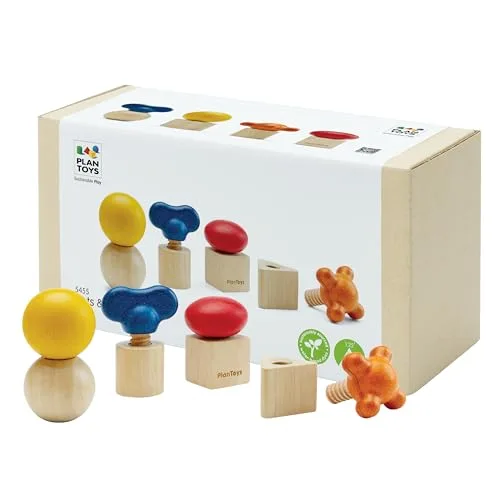
14. PlanToys Nuts & Bolts
A hands-on set where toddlers twist nuts onto bolts, practicing rotation, grip strength, and bilateral coordination. In 2026, it's a practical-life adjacent favorite for kids who love "tools" and mechanical motions. Great for toddlers who are ready for a more purposeful challenge than simple stacking. The twisting action supports controlled finger movements used later for caps, lids, and fasteners.
- Excellent practice for wrist rotation and hand strength
- Simple concept with a satisfying "it fits" payoff
- Great for kids who love mechanical, tool-like play
- Can be too challenging for toddlers who are early in fine-motor development
- Less engaging for kids who prefer pretend play themes
- Pieces can roll away during play
15. Grimm's Rainbow Stacker
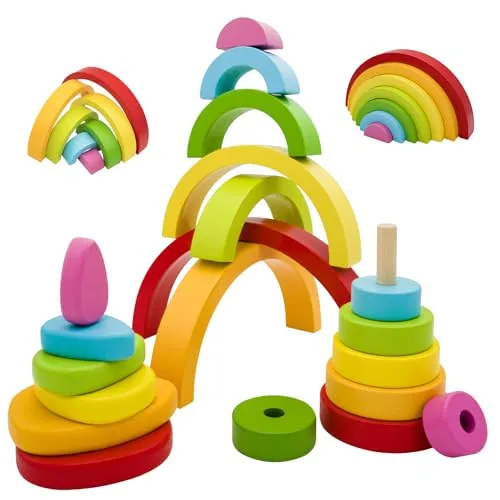
15. Grimm's Rainbow Stacker
A beautiful wooden rainbow stacker that invites toddlers to nest, stack, and build imaginative scenes. In 2026, it's a popular Montessori-leaning pick because it supports fine motor control while staying completely open-ended. Great for toddlers who like arranging, building bridges, or making "caves" for small figures. The curved pieces encourage careful alignment and gentle placement.
- Open-ended: stacking, nesting, building, and pretend play
- Encourages careful alignment and controlled placement
- Looks lovely on a Montessori-style shelf
- Premium-style toy that can feel pricey for a simple concept
- Wood finish can show dings if dropped often
- Not as "instructional" for parents who want a single defined activity
Music, Tactile Play & Calm Focus
Some fine-motor practice happens best when it doesn't look like practice. These 2026 picks add sensory feedback—popping, pressing, tapping—so toddlers stay engaged while strengthening finger control and attention.
16. Lovevery The Babbler Play Kit
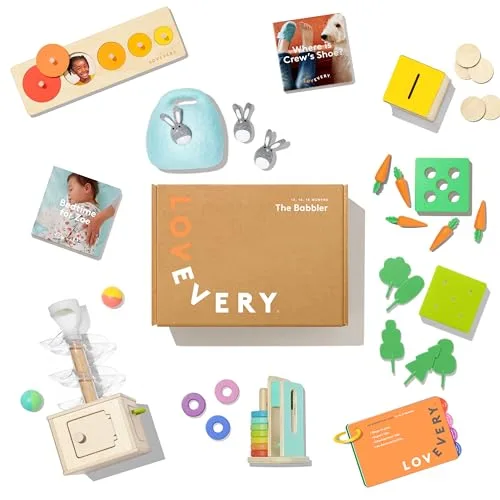
16. Lovevery The Babbler Play Kit
A curated play kit designed for a specific developmental window, with activities that encourage grasp refinement, two-hand coordination, and purposeful exploration. In 2026, it's a thoughtful gift for caregivers who want guidance on what to offer next without filling the house with random toys. Best for toddlers who enjoy rotating activities and learning through hands-on discovery. The kit format makes it easy to keep play intentional and uncluttered.
- Curated activities support purposeful, age-appropriate skill building
- Great for families who like toy rotation and simple setups
- Giftable set that feels considered and premium
- Less flexible if you prefer choosing single toys à la carte
- Some activities may land better than others depending on your child
- Kits can feel bulky to store long-term
17. Lovevery The Real Life Play Kitchen
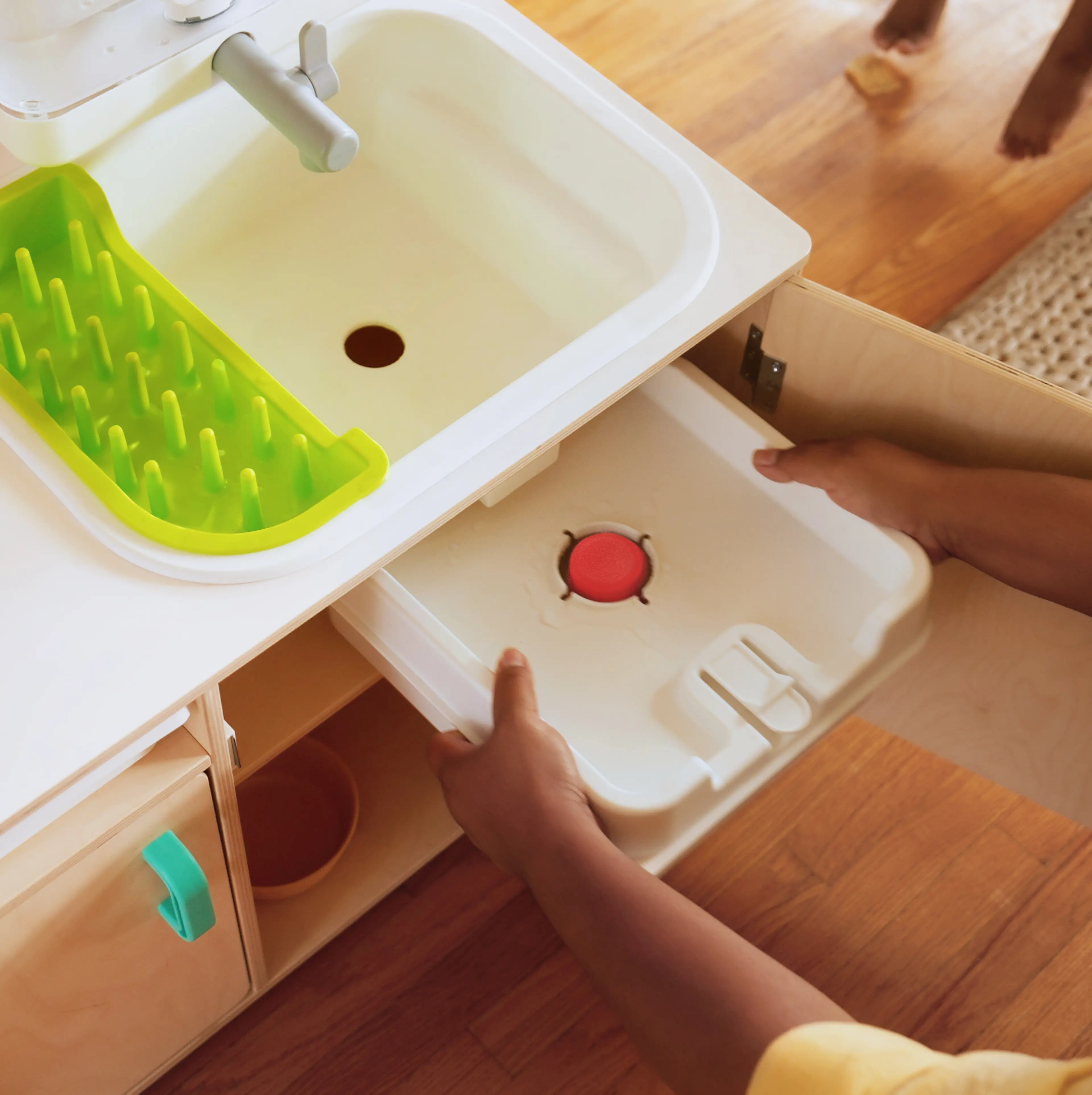
17. Lovevery The Real Life Play Kitchen
A realistic play kitchen designed to invite practical-life style pretend play—turning knobs, opening doors, and using hands with purpose. In 2026, it's a strong long-term gift because it turns everyday routines into fine-motor practice: stirring, "washing," and organizing. Best for toddlers who love copying grown-ups and staying busy while you're in the real kitchen. The realistic features encourage gentle, controlled movements rather than frantic button-mashing.
- Encourages practical-life pretend play with lots of hand work
- Great for independent play in shared family spaces
- Long lifespan as skills and pretend play grow
- Takes up more space than tabletop fine-motor toys
- Assembly and placement require planning
- Accessories may be needed to fully expand play
18. Fat Brain Toys Dimpl Deluxe
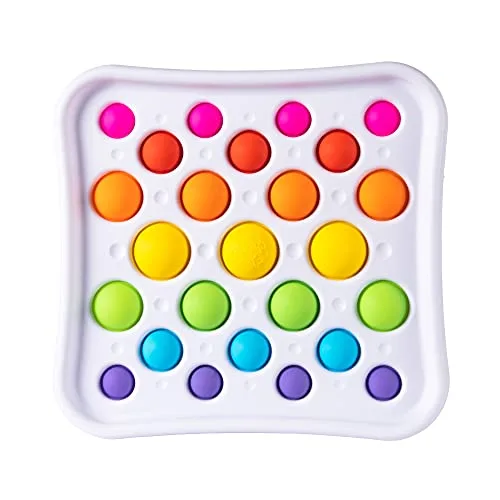
18. Fat Brain Toys Dimpl Deluxe
A tactile silicone "pop" toy with different bubble sizes that toddlers press and poke for sensory feedback. In 2026, it's a great calm-focus option for car rides, waiting rooms, or winding down without screens. Ideal for toddlers who seek sensory input and like repetitive hand movements. The varied resistance encourages finger strength and isolated finger control.
- Great for calm, repetitive fine-motor input
- Portable and easy to wipe clean
- Different bubble sizes add variety and challenge
- Not as open-ended as building or pretend play
- Some toddlers may lose interest after novelty wears off
- Can be distracting during quiet group settings
19. Hape Pound & Tap Bench with Slide Out Xylophone
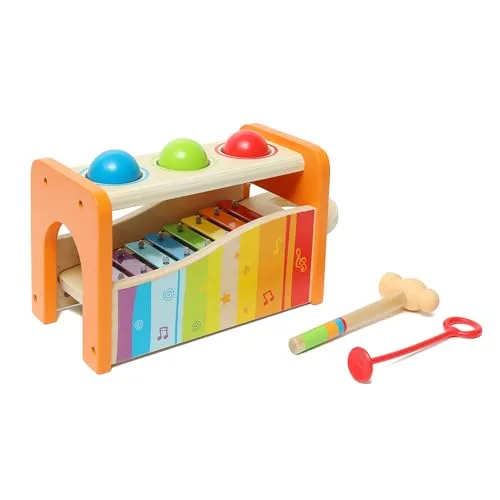
19. Hape Pound & Tap Bench with Slide Out Xylophone
A classic pounding bench where toddlers hammer balls through holes, then pull out a xylophone for musical play. In 2026, it's a great two-in-one gift that supports hand-eye coordination, controlled force, and wrist stability. Ideal for toddlers who like active, noisy play but still benefit from purposeful repetition. The slide-out instrument adds variety once the pounding routine is mastered.
- Builds coordination through hammering and aiming
- Two modes of play (pound + music) extend interest
- Great for energetic toddlers who need hands-on input
- Louder than many Montessori shelf toys
- Requires space to play safely with the hammer
- Balls can roll away during play
Ready to Share Your Wishlist
Build a fine-motor toy shortlist you'll actually use: add any item from this guide to your WishDeck wishlist in one tap so you don't lose the ideas you love while you compare options. Create a dedicated folder (like "Toys" or "Birthday Gifts") and share your wishlist with friends and family. They can reserve gifts directly from your list, which helps you avoid duplicates—no receiving the same toy twice. Gifting becomes easier for everyone when your list is in one place.
Frequently Asked Questions
Popular Reads
- Best Montessori Toys for Toddlers (Ages 1–3): Top Learning Toys by Skill (2026)
- Must-Have Baby Gear 2026 — The Ultimate Registry List
- Best Baby Shower Gifts 2025: Practical, Aesthetic Picks + Wishlist Ideas
- Newborn essentials checklist 2026 (only what you'll use week 1–4)
- Screen-Free 'Audio Toys' for Toddlers (2026): Yoto vs Tonie + Best Starter Sets
Looking for more insights? Explore related topics: Best Montessori Toys for Toddlers (2026), Must-Have Baby Gear 2026, Baby Shower Gifts 2025 or find more on our Blog.